
Beyond Price / Digital Concert Program
Silent
Resonances1.0
無聲的共鳴
Ningjialu Liu — Piano
Macao Cultural Centre
Small Auditorium
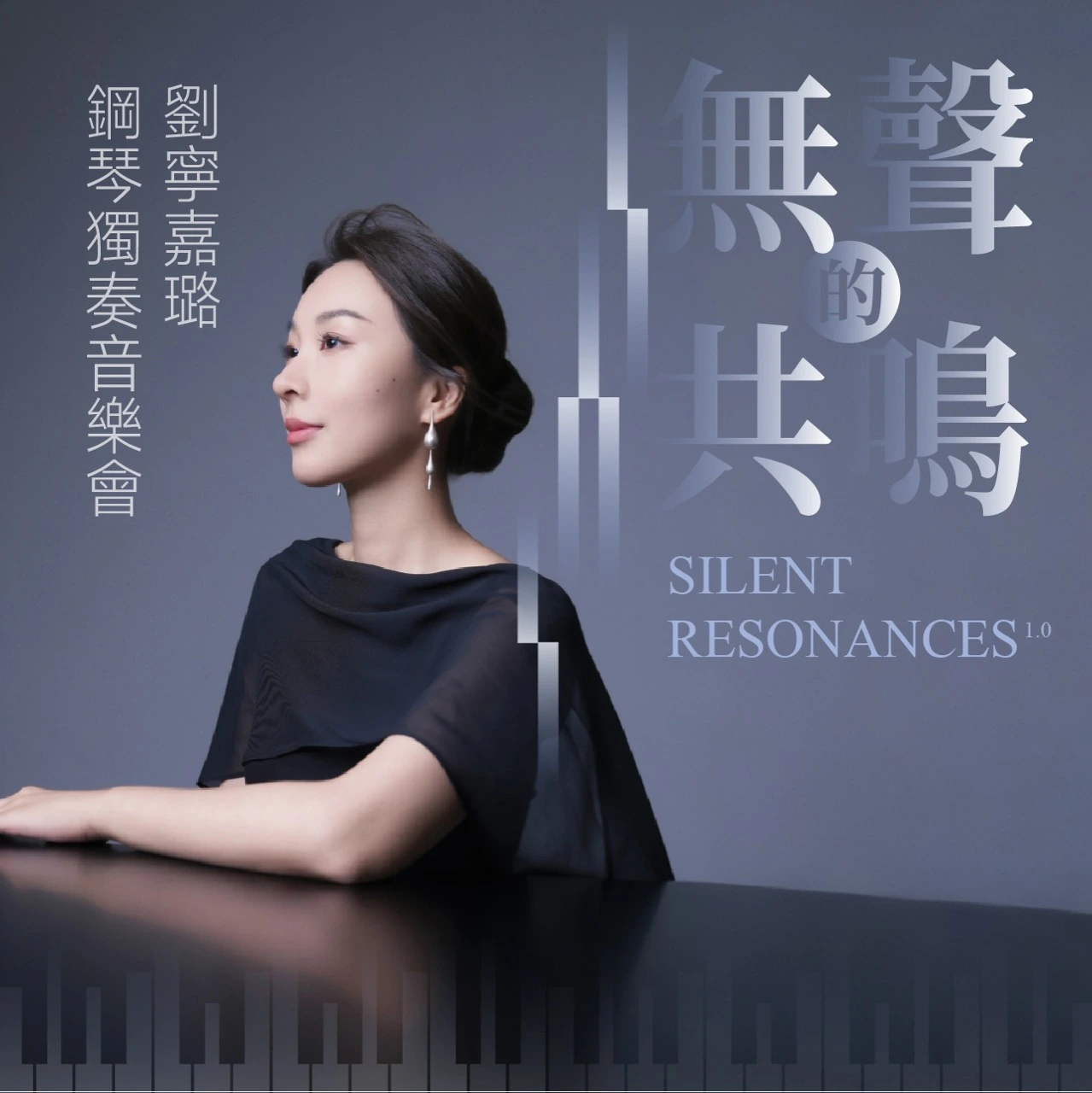
Program text supplied by the pianist. Draft translations are marked for editorial review; final repertoire and editorial details remain subject to confirmation.
About the Project
They were never silent. Some voices simply had to wait longer to be heard.
Silent Resonances places music by women composers at the center of the listening experience. It invites audiences to encounter distinctive works that have not always occupied a prominent place in the standard classical repertoire. Rather than presenting a single, universal story of womanhood, the recital brings together individual voices shaped by different eras, cultures, and lived experiences.
Across three chapters, the program moves from an intimate musical dialogue between lovers to the contradictions and convictions of the inner life, and finally to a gallery of women drawn from literature and mythology. This is not a linear tale of dependence followed by liberation. It is an invitation to listen more closely to complexity and difference.
A Note from the Pianist
I have always believed that performance is more than turning notes into sound. It is also an act of choice: what we choose to play, how we choose to listen, and which stories we bring onto the stage.
These composers do not need me to speak for them. Their voices already exist in the music they left us. What I hope to create is a space in which those voices can meet listeners anew.
As I have worked on these pieces, I have been moved by their tenderness, wit, conflict, defiance, and imagination. I hope tonight offers more than an introduction to several composers. Perhaps it will also prompt us to ask: what else becomes audible when we truly begin to listen?
Program
Program at a Glance
Chapter I
The WeddingDavidsbündlertänze, Op. 6 (selected movements)
Selected movements
- Lebhaft
- Innig
- Etwas hahnbüchen
- Ungeduldig
- Einfach
- Sehr rasch und in sich hinein
- Nicht schnell mit äußerst starker Empfindung
- Frisch
- Wie aus der Ferne
Chapter II
The Inner VoiceChapter I
The Wedding
Chapter introduction
Before the Wedding
This paragraph is a translation draft.Before love becomes marriage, it is first an act of imagination filled with hope, waiting, and unease.
In 1837, Robert Schumann and Clara Wieck were not yet married. Their love was filled with anticipation, but it also faced strong opposition from Clara’s father. It would take another three years before they could finally marry.
That same year, Robert composed Davidsbündlertänze, a collection of eighteen character pieces for piano. The music moves between passion, tenderness, and impatience, as though countless emotions were unfolding simultaneously in the mind of someone imagining a future with the person they love.
But there is something even more intriguing about this work: its opening musical idea does not belong entirely to Robert.
It comes from a melody by Clara Wieck.
And that is why we begin tonight’s concert with Clara’s music.
Composer biography
Clara Wieck
More Than Robert Schumann’s Wife
1819–1896
Pianist · Composer
In music history, Clara Schumann’s name is often mentioned alongside that of her husband, Robert. Yet long before their marriage, she had already established herself as an accomplished pianist and composer.
From an early age, Clara received rigorous musical training under her father, Friedrich Wieck. She began performing publicly as a child and gradually developed an international concert career. She was not only an interpreter of other composers’ music but also a creator of her own.
Published in 1836, Soirées musicales, Op. 6, is among the significant piano works of her youth. Consisting of six character pieces, the collection reveals the young Clara’s sensitivity to dance rhythms, lyrical expression, and the expressive possibilities of the piano.
Program notes
Mazurka in G Major, Op. 6 No. 5
The mazurka originated as a Polish folk dance, traditionally written in triple meter. Unlike the waltz, however, its rhythmic emphasis does not always fall on the first beat.
These subtle shifts in accent give the music a distinctive character—lighthearted, playful, and at times almost delightfully stubborn.
Clara’s Mazurka is a relatively short piece, yet its melodic gestures are remarkably distinctive. It combines youthful vitality with moments of delicate lyricism.
What makes this melody particularly fascinating is the journey it would later take into Robert’s musical world.
Listening guide
A Musical Connection
Pay attention to the rhythm and melodic shape of the opening theme. You will encounter it again in Robert Schumann’s Davidsbündlertänze.
Composer biography
Robert Schumann
Dances for an Imagined Future
1810–1856
Composer · Pianist · Music Critic
In 1837, Robert and Clara’s relationship entered a significant period. Composed that same year, Davidsbündlertänze became one of Schumann’s most deeply personal works for piano.
In an 1838 letter to Clara, Robert described the dances as filled with thoughts of their wedding, comparing the work to a Polterabend—a traditional German celebration held before a wedding.
Yet this music is far from an uninterrupted celebration of happiness.
There is passion, but also hesitation; restless excitement, but also moments of almost whispered tenderness.
This is part of what makes Schumann’s musical language so distinctive. Within the space of just a few measures, one emotion can suddenly give way to another, as though we were listening to different voices conversing within a single mind.
Program notes
Davidsbündlertänze, Op. 6
The Davidsbündler, or “League of David,” was an imaginary society of artists created by Schumann in his writings and compositions. It represented his belief in artistic imagination and his desire to challenge conventional musical thinking.
Among its most recognizable figures were two fictional personalities who embodied contrasting aspects of Schumann’s own artistic identity:
Florestan — passionate, impulsive, courageous, and at times almost reckless.
Eusebius — introspective, sensitive, gentle, and deeply poetic.
In the first edition of Davidsbündlertänze, published in 1838, Schumann used initials such as F. and E. to associate individual dances with these contrasting personalities.
Although the work is called a collection of dances, it often feels more like a constantly shifting psychological drama.
Some passages seem to rush forward with irresistible urgency, while others suddenly retreat into quiet contemplation. At times, these two personalities appear to oppose one another; at others, their voices seem to merge.
A musical connection
Clara’s Musical Signature
At the beginning of Davidsbündlertänze, Schumann included the inscription:
Motto von C. W.
“A motto by Clara Wieck.”
The musical idea comes from Clara’s Soirées musicales, Op. 6 No. 5—the very Mazurka that opens this chapter of our concert.
Interestingly, both compositions bear the opus number 6. While the shared number alone does not establish that Robert deliberately chose it to match Clara’s work, the musical connection between these two Opus 6 compositions adds a deeply personal dimension to the story.
We hear Clara first. Then, through Robert’s music, we hear her again.
This programming choice is not intended to present Clara merely as Robert’s muse or source of inspiration. Quite the opposite: it invites us to encounter her as an independent creative voice before discovering how two artists communicated through music.
From the Pianist
A Personal Reflection
What fascinates me most about Davidsbündlertänze is not the idea of a perfect love story, but the imperfections and contradictions within it.
I hear anticipation, but also uncertainty. I hear Florestan’s impulsiveness alongside Eusebius’s hesitation.
Perhaps what makes love truly moving is the freedom to be both courageous and vulnerable in the presence of another person.
Chapter II
The Inner Voice
Chapter introduction
Chapter Introduction | When Music Turns Inward
If the first chapter tells the story of a dialogue between two voices, in the second we turn our attention to one person’s inner world.
Tenderness and anger, longing and restraint, doubt and conviction often coexist within the same soul.
Amy Beach and Sofia Gubaidulina were born in different eras and have distinctly different musical languages. One continues the lyrical tradition of Romanticism; the other uses modern music to explore the boundaries of sound and the spiritual world.
Their works both invite us to consider: when the outside world tries to define us, how do we preserve our own voice?
Composer biography
Amy Beach
A Composer Who Refused to Be Defined by Her Time
1867–1944
Composer · Pianist · Advocate for Women in Music
Amy Beach is one of the most important women composers in American music history.
She showed extraordinary musical talent from an early age and made her formal debut in Boston at sixteen. After marrying in 1885, however, she greatly reduced her public performances and turned her main attention to composition.
Unlike many of her male contemporaries who had received formal training, Beach was largely self-taught in composition. In 1896, her Gaelic Symphony was premiered by the Boston Symphony Orchestra, becoming an important milestone in American music history.
She not only sought space for her own creative work but also actively supported other women musicians. In 1925, she became a founding member and the first president of the Society of American Women Composers, working to secure more performances and recognition for women composers’ works.
Program notes
Beginning with a Love Song
In 1894, Beach composed Ballade for solo piano. The work draws on melodic material from her earlier art song O my luve is like a red, red rose. Based on a love poem by the Scottish poet Robert Burns, the song uses a red rose in bloom as a metaphor for deep and enduring love.
In Ballade, a melody originally written for the voice enters the piano’s wider world of sound.
The opening theme is tender and songlike, as though someone were speaking in confidence. Yet the music does not remain in tranquility throughout. As harmony, texture, and dynamics change, the emotion gradually intensifies, ultimately developing into a passionate climax.
When the original melody re-emerges, it seems to have traveled through a long inner journey.
The same melody thus carries a different emotional weight.
Listening guide
Listen For
Listen for the opening melody, which breathes like a human voice, and how it gradually develops into a more intense, weightier piano language.
When the theme returns after the climax, do you feel that it is no longer quite the same?
Composer biography
Sofia Gubaidulina
Continuing Along a Path Others Did Not Understand
1931–2025
Composer · Musical Visionary
Sofia Gubaidulina is one of the most original composers of the twentieth century.
She was born in the Tatar region of the Soviet Union and received her musical education first in Kazan and then in Moscow. In an environment where official aesthetics and ideology placed restrictions on creative work, her explorations of modern sonorities, experimental musical language, and spiritual expression did not always receive recognition.
During her studies, her creative direction was criticized. Dmitri Shostakovich, however, encouraged her to continue along the path that was considered “wrong.”
This experience later became an important symbol of her spirit of artistic independence.
Religion and spirituality are also important parts of Gubaidulina’s musical world. Through opposing sonorities, numerical structures, and musical forms, she often explores themes such as conflict, sacrifice, and transcendence. The cross is an important symbol she uses in some works, but this does not establish that specific musical figures in Chaconne carry definite religious meanings.
Program notes
A Modern Voice Within an Ancient Form
The chaconne is a musical form with a long history, usually built on a recurring harmonic progression or theme and developed through continuous variations.
In 1962, Gubaidulina brought this form, widely used during the Baroque period, into her own modern musical language.
The work begins with a solemn, forceful chordal theme. Heavy bass notes, sharply defined rhythms, and biting harmonies immediately establish a world of sound charged with tension.
As the music unfolds, the theme undergoes constant changes: at times it becomes dense, intense chords; at others it turns into rapidly flowing figures, then suddenly enters a space of near stillness.
The middle section has a toccata-like drive and fugal contrapuntal writing. Different voices enter in succession and intertwine, moving the music from weighty chords toward the complex motion of individual lines.
When the original theme returns, it seems to have passed through conflict and rebuilding, acquiring new meaning.
Here, repetition does not mean staying in place; it is a force of continual change.
Listening guide
Listen For
Listen for the stark contrasts between very loud and very soft, motion and stillness, density and sparseness.
In the middle section, try to distinguish the entrances of different voices within the complex sound. Finally, when the opening theme returns, has it already changed your feeling for the work as a whole?
From the Pianist
The Power of Saying No
I have always understood Gubaidulina’s Chaconne as an uncompromising force.
When I perform this work, I often feel opposing states: burning and coldness, motion and stillness, gravity and antigravity.
Some sounds seem to fall with an irresistible weight; others struggle to break free of that force.
These oppositions make me think about how a person finds their own place between external pressure and inner conviction.
For me, the power this work expresses is not simply anger or resistance, but a firm affirmation of the self.
Saying “no” does not always mean rejecting others. Sometimes it means refusing to give up your own voice.
This is not the composer’s definitive interpretation of the work, but my own understanding, gradually formed through performing it.
Chapter III
A Woman of Many Faces
Chapter introduction
How Many Faces Can One Woman Have?
If Chapter I explored a dialogue between two voices in love, and Chapter II turned inward to the complexities of a single soul, Chapter III invites us into the worlds of five women drawn from literature and mythology.
They are mysterious, loyal, vulnerable, courageous, and sometimes powerful enough to shape the destinies of others.
Their stories are different, yet most of their lives have been passed down through the words and imaginations of others.
The French composer Mel Bonis reimagined these women through the piano.
And when we consider Bonis’s own life, these musical portraits take on another layer of meaning: Must a woman become only what her society expects her to be?
Composer biography
Mel Bonis
One Name, Many Identities
1858–1937
Composer · Pianist
Born Mélanie Bonis, she chose to publish her compositions under the more gender-neutral name Mel Bonis, partly to avoid the prejudices faced by women composers of her time.
As a young musician, Bonis demonstrated exceptional talent. The composer César Franck recognized her promise and helped her enter the Paris Conservatoire, where she fell in love with the singing student and poet Amédée Landély Hettich.
Her parents strongly opposed their relationship, forcing her to abandon her studies. In 1883, she married Albert Domange, a wealthy industrialist considerably older than herself.
Following her marriage, Bonis devoted much of her life to the responsibilities of being a wife, mother, and household manager, and her compositional activity diminished for a time.
Years later, she was reunited with Hettich, who encouraged her to return to composition and helped reconnect her with the Parisian music publishing world. Their relationship eventually became romantic again, and in 1899 they had a daughter, Madeleine, whose parentage could not be publicly acknowledged.
Caught between family responsibilities, religious convictions, and personal desires, Bonis lived a life of profound contradictions. Yet she went on to compose approximately three hundred works, including piano music, chamber music, songs, and orchestral compositions.
Her story is not simply that of a woman constrained by her time, but also that of an artist who never entirely surrendered her creative identity.
Program notes
Femmes de légende
Femmes de légende (Women of Legend) brings together seven piano pieces named after women from literature and mythology.
Rather than being conceived as a single continuous suite, these character pieces were composed at different stages of Bonis’s career. In 2003, Christine Géliot assembled them into the collection now widely known as Femmes de légende.
Tonight, we encounter five of these women: Mélisande, Desdémona, Ophélie, Viviane, and Omphale.
Rather than retelling their entire stories, Bonis captures something of each character’s emotional world through melody, harmony, rhythm, and pianistic color.
Character portrait
Mélisande, Op. 109
The Enigmatic Woman
Mélisande comes from Maurice Maeterlinck’s Symbolist drama Pelléas et Mélisande.
A mysterious young woman of unknown origins, she is discovered in a forest by Prince Golaud and becomes entangled in a tragic relationship marked by love, suspicion, and uncertainty.
Bonis’s music preserves her elusive character. Flowing melodies and delicate harmonic colors create an atmosphere that seems almost veiled in mist.
Character portrait
Desdémona, Op. 101
The Misunderstood Woman
Desdémona is drawn from Shakespeare’s Othello. Defying her father’s wishes, she chooses love, only to become the victim of her husband’s jealousy and suspicion.
Often remembered as a symbol of innocence and loyalty, she is also a woman who once made a courageous choice of her own.
In Bonis’s music, lyrical melodies intertwine with expressive harmonies, suggesting a sense of unease beneath the surface of tenderness.
Character portrait
Ophélie, Op. 165
The Woman Lost in Tragedy
Ophélie comes from Shakespeare’s Hamlet.
Caught between family expectations, love, and the dangerous politics of the Danish court, she gradually loses her emotional stability, eventually experiencing a psychological collapse and drowning.
Bonis creates a fragile, unsettling atmosphere through delicate and poetic musical writing. Flowing gestures and shifting harmonies seem to reflect an inner world losing its sense of balance.
Character portrait
Viviane, Op. 80
The Enchantress
Viviane belongs to the legends of King Arthur and is closely associated with the Lady of the Lake and the wizard Merlin.
Across different versions of the story, she appears as a guide, a powerful enchantress, or a woman capable of confining Merlin through magic.
Bonis evokes a world of mystery and imagination through light, agile textures and colorful pianistic writing.
Character portrait
Omphale, Op. 86
The Woman Who Holds Power
Omphale is a queen of Lydia in Greek mythology.
According to the myth, the hero Heracles, known in Roman tradition as Hercules, was required to serve under her authority. The story has often been associated with a reversal of traditional gender roles: the powerful male hero temporarily loses his independence, while a woman holds authority.
Through distinctive musical gestures and dramatic contrasts, Bonis portrays a character whose presence differs markedly from the preceding portraits.
Listening guide
A Guide to the Music
Notice how Bonis uses different pianistic colors and musical gestures to give each woman a distinct personality.
From Mélisande’s elusive mystery and Ophélie’s emotional instability to Viviane’s agility and Omphale’s commanding presence, do these contrasting musical portraits suggest the richness and complexity of women’s identities?
From the Pianist
The Lives She Might Have Lived
After learning about Mel Bonis’s life, I find it difficult not to wonder what these women from literature and mythology might have meant to her.
She was once a gifted Conservatoire student, then a young woman forced to abandon her studies. She became a wife and mother, yet remained a composer who longed to create.
Among all these identities, which one was truly hers?
When I perform Femmes de légende, I like to imagine that these characters might represent the many possibilities that can exist within a single person—some lived, others left unexplored.
She could be mysterious or vulnerable, loyal or rebellious. She could also be powerful.
I cannot know whether Bonis herself understood these works in this way. But her music reminds me how easily we define a woman through a single identity: someone’s wife, someone’s mother, or the heroine of someone else’s story.
A life is always more complicated than the labels we give it.
Perhaps we do not need to search for one definitive Mel Bonis among these characters.
Perhaps she could contain many different selves.
A woman is never just one story.
Artist & Credits
Artist biography
Ningjialu Liu
Ningjialu Liu is a pianist, keyboardist, educator, and curator whose work moves between performance, teaching, orchestral and chamber music, and the creation of new contexts for listening.
Her relationship with the music of women composers began to take a more deliberate form through her performances of Florence Price’s Piano Concerto, first with the Texas Medical Center Orchestra in 2020 and later following her concerto competition win at the University of Cincinnati College-Conservatory of Music.
What began with Price gradually expanded into a broader artistic inquiry: how repertoire becomes visible, how performers participate in shaping musical memory, and how greater choice can create greater artistic freedom.
Her curatorial work now brings historical and living composers into the same conversation. Through Beyond Price and projects including Silent Resonances, Liu approaches performance not only as interpretation, but as a means of discovery—one capable of leaving a trace for the next performer, listener, or question.
Her work is grounded in a conviction that artistic excellence and repertoire discovery need not be separate pursuits: unfamiliar music deserves not merely to be presented, but to be imagined, studied, and performed with the same seriousness as the repertoire already at the center of concert life.
About
Beyond Price
Beyond Price: The Female Composer Initiative is an evolving cultural initiative devoted to expanding how the music of women composers is encountered, performed, understood, and carried forward.
Through performance, discovery, writing, research, conversation, education, and forms still to be imagined, Beyond Price creates new points of encounter between composers, artists, audiences, and ideas—across past, present, and future.
We are not interested in replacing one canon with another, or in prescribing what anyone should value.
We are interested in possibility: in making the musical world larger from which artists and listeners are free to discover, question, and choose.
Because sometimes the beginning is remarkably simple:
You hear something you did not know was there.
And from there, everything else can change.
Contact Beyond Price
connect@beyondprice.org